Keeping your commercial property clean isn’t just about appearance—it plays a direct role in safety, customer perception, and long-term maintenance costs. One of the most common questions property managers ask is:
How often should a parking lot be swept?
The answer depends on several factors, including traffic levels, property type, and environmental conditions. While there’s no one-size-fits-all schedule, there are clear guidelines that can help you determine what’s right for your property.
Why Regular Parking Lot Sweeping Matters
Routine sweeping is one of the simplest ways to protect your property investment. Over time, debris like dirt, trash, and organic material can break down asphalt, clog drainage systems, and create safety hazards.
Regular sweeping helps:
Prevent buildup that leads to premature pavement damage
Reduce slip-and-fall risks for pedestrians
Maintain a clean, professional appearance
Support long-term asphalt maintenance efforts
For commercial properties, first impressions matter—and your parking lot is often the first thing customers and tenants see.
General Guidelines for Sweeping Frequency
The right sweeping schedule typically aligns with how your property is used. Higher traffic brings more debris, which means more frequent service is needed to maintain cleanliness and prevent damage.
High-Traffic Properties (Daily to 3x per week)
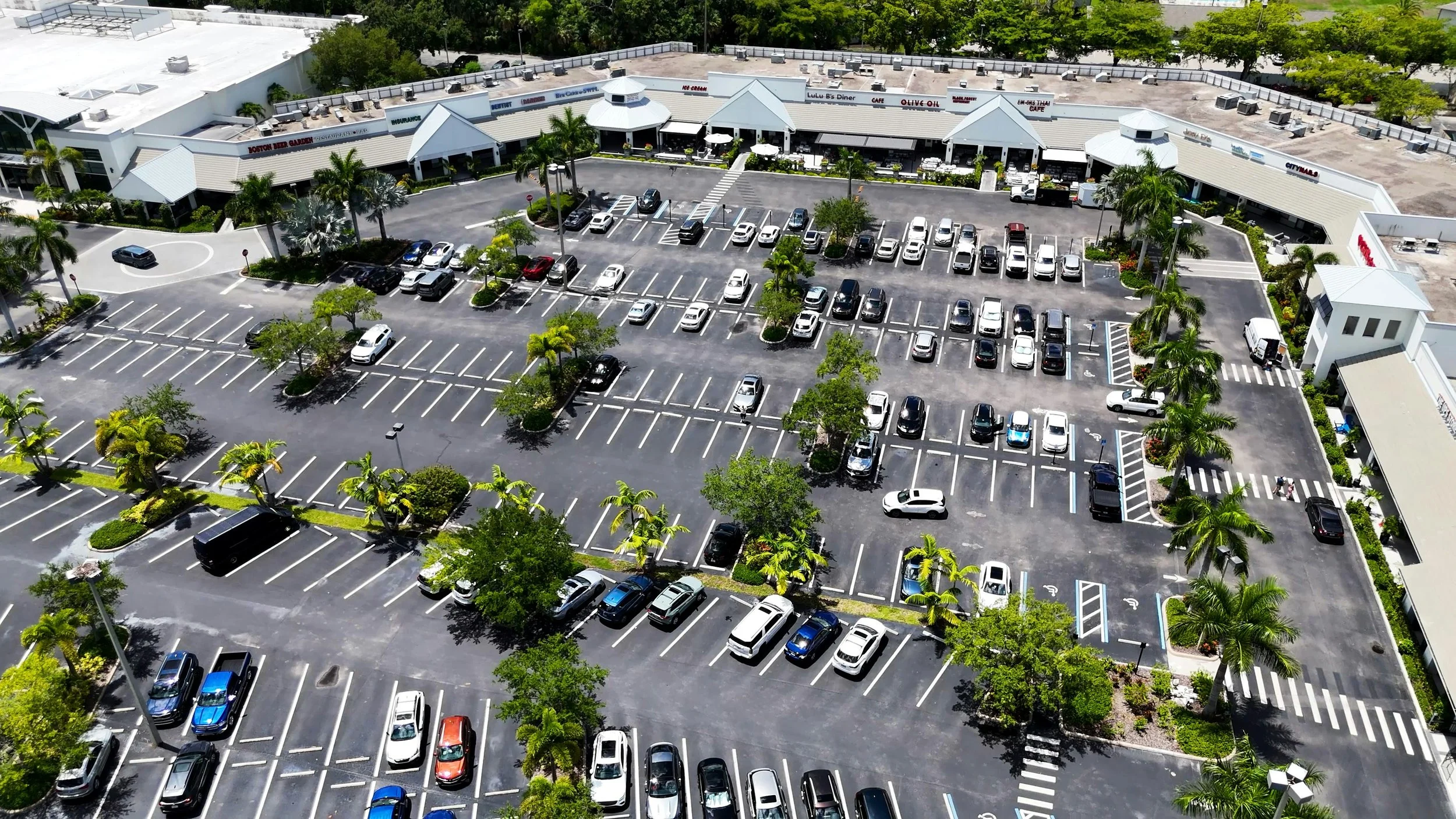
Properties with constant activity require the most attention. Debris accumulates quickly throughout the day, especially in areas with heavy foot traffic or frequent turnover.
Common examples include:
Shopping centers
Grocery stores
Restaurants
Entertainment venues
Without frequent sweeping, these properties can quickly appear unkempt and create negative customer impressions.
Moderate-Traffic Properties (1–2x per week)
These properties see steady use but not constant turnover. A consistent schedule helps maintain cleanliness without over-servicing.
Typical properties include:
Office parks
Medical offices
Mixed-use developments
Regular sweeping at this level helps prevent buildup while keeping maintenance costs predictable.
Low-Traffic Properties (Weekly or Bi-Weekly)
Lower traffic doesn’t mean no maintenance—it just means debris accumulates more slowly. Even minimal buildup can cause long-term wear if left unmanaged.
Examples include:
Warehouses
Industrial facilities
Storage properties
A routine schedule ensures debris doesn’t collect in corners, drains, or along curbs over time.
Factors That Impact Your Ideal Sweeping Schedule
While property type is a strong starting point, several external factors can increase how often your lot needs to be serviced.
Traffic volume is one of the biggest drivers. More vehicles bring more dirt, oil, and debris onto your property.
Surrounding environment also plays a major role. Properties near trees, construction zones, or high-traffic roads tend to accumulate debris much faster and often require more frequent cleaning.
Weather conditions can quickly change your needs as well. Wind, storms, and seasonal changes can lead to sudden increases in leaves, trash, and sediment.
Finally, tenant type matters. Retail and restaurant spaces typically generate more waste than office-only environments, which can impact how often sweeping is needed.
Signs You May Need to Increase Sweeping Frequency
Even with a set schedule, your property may show signs that it needs more frequent attention. Ignoring these early indicators can lead to higher maintenance costs over time.
Watch for:
Visible trash or debris throughout the lot
Dirt buildup along curbs and in corners
Leaves or debris collecting in parking spaces
Complaints from tenants or customers
A noticeable decline in overall appearance
If these issues are consistent, it’s usually a sign your current schedule isn’t enough.
Sweeping vs. Portering: Do You Need Both?
Sweeping and portering are often confused, but they serve different purposes.
Parking lot sweeping focuses on large-scale cleaning using mechanical equipment to clear debris from the surface.
Portering services provide ongoing, detailed maintenance throughout the day, such as:
Picking up trash
Emptying receptacles
Maintaining sidewalks and entryways
For higher-traffic properties, combining both services creates a more consistent and polished appearance throughout the day—not just after scheduled cleanings.
The Long-Term Benefits of a Consistent Sweeping Schedule
A proactive sweeping schedule doesn’t just keep your property clean—it helps prevent much larger issues down the line.
Consistent maintenance can:
Extend the lifespan of your asphalt
Reduce the need for costly repairs
Improve safety and reduce liability risks
Enhance the experience for customers and tenants
Over time, routine sweeping is far more cost-effective than reactive maintenance.
Finding the Right Sweeping Schedule for Your Property
Every property is different, and the best sweeping schedule is one that reflects how your space is actually used. Factors like traffic patterns, surrounding conditions, and tenant needs all play a role in determining the right frequency.
Working with a professional sweeping provider can help you evaluate these factors and build a schedule that keeps your property clean, safe, and well-maintained year-round.
Keep Your Property Clean, Safe, and Professional
A clean parking lot is a reflection of your business. Whether you need daily service or a weekly maintenance plan, consistency is what makes the difference.
If you’re unsure what schedule is right for your property, a professional evaluation can help you create a plan that protects your investment and keeps your property looking its best.